How Exterior Grading Impacts Basement Waterproofing Success

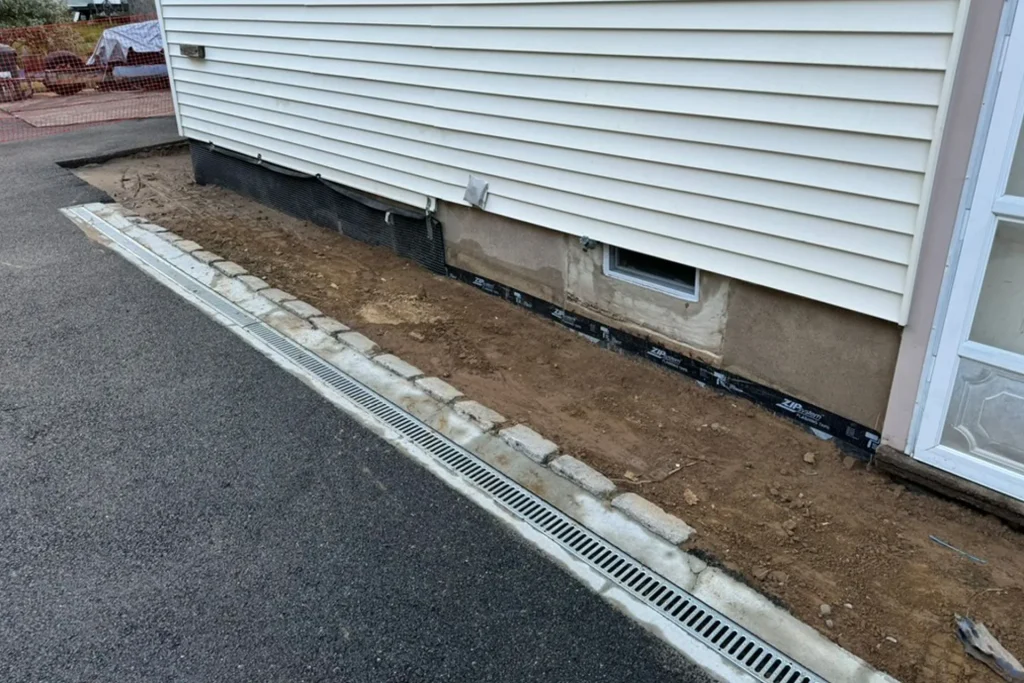
Basement waterproofing often gets discussed as if it begins at the foundation wall. In the field, that is rarely true. Most wet basement problems start farther out, where roof runoff lands, where soil slopes the wrong way, where garden beds trap moisture against the house, or where years of settling quietly undo the original grade. If water is allowed to collect around a foundation, even a well-built waterproofing system can end up working harder than it should.
That is why exterior grading matters so much. It is not a cosmetic landscaping detail. It is one of the first and most important lines of defense in basement waterproofing. When the ground around a house sheds water efficiently, the entire structure benefits. Hydrostatic pressure drops. Seepage risks fall. Drain tile systems, sump pumps, and membranes face a lighter load. Homeowners see fewer damp spots, fewer musty odors, and fewer expensive callbacks after a waterproofing job.
This relationship becomes obvious on real properties. Two homes can have nearly identical foundations, built in the same era with the same concrete and similar drainage systems. One stays mostly dry for decades. The other develops recurring leaks after every heavy rain. Very often, the difference is not hidden underground. It is the surface grade.
Water always looks for the easiest path
Rainwater and melting snow do not need much encouragement. Gravity does the work. If the land around a home pitches toward the walls, water moves there first. Once it reaches the foundation perimeter, it begins to soak the adjacent soil. That saturated soil becomes heavier, denser, and slower to drain. If the storm is long enough or the soil type is tight enough, pressure builds against the basement walls.
That pressure matters. Concrete is strong, but it is not magically waterproof on its own. Poured walls can crack. Block walls have mortar joints and hollow cores. Cold joints, tie rod holes, utility penetrations, and old patch repairs can all become entry points. Water does not need a dramatic opening. A hairline path under pressure is often enough.
Exterior grading influences this entire sequence before the wall ever gets tested. A positive grade moves water away before it has time to pool. A negative grade, even a subtle one, keeps feeding the same vulnerable area. Many homeowners look at a damp corner inside and assume the issue must be directly behind it in the wall. Sometimes it is. Just as often, the real cause is ten or fifteen feet away, where the yard drains back toward the house.
What proper grading actually means
People hear the term "grading" and picture heavy equipment reshaping a lot. Sometimes that is necessary, especially on https://gregoryomug323.focalledger.com/posts/basement-waterproofing-for-homes-with-crawl-space-connections new construction or severe drainage failures. More often, exterior grading means restoring and maintaining the slope immediately around the home so surface water flows away.
A common rule of thumb is to aim for a drop of about 6 inches over the first 10 feet away from the foundation. That number is useful because it is easy to understand, but the site still has to be read in context. A narrow urban lot with adjacent walkways, fences, and neighboring properties may require a more creative drainage plan. A rural lot with clay soil may shed surface water slowly even with a decent slope. A split-level home set into a hillside may need swales, intercept drains, or retaining features to redirect runoff before it reaches the basement wall.
The point is not to chase a textbook number in isolation. The point is to manage water movement across the whole area that influences the foundation. Good grading creates a path of least resistance away from the structure. Bad grading interrupts that path, traps runoff, or sends concentrated flow exactly where you do not want it.
Why basement waterproofing fails when grading is ignored
Some of the most frustrating waterproofing failures happen after a contractor installs a quality interior system or repairs cracks professionally, only for the homeowner to keep seeing moisture problems. The repair itself may be fine. The site conditions are not.
I have seen basements with new sump pumps and interior drainage channels still take on water because the backyard pitched toward the rear wall like a shallow bowl. During a summer storm, hundreds of gallons from the lawn and patio had nowhere to go except to the foundation edge. The pump was doing its job, but it was reacting to a preventable problem. The house would have performed better, and the system would have lasted under less strain, if the grade had been corrected first.
This is one of the most overlooked truths in basement waterproofing. Waterproofing products are not substitutes for drainage. They are part of a system. When exterior grading is poor, every other component works in a harsher environment. Sealants age faster when surfaces stay wet. Exterior membranes remain under more constant moisture exposure. Foundation drains can silt in or become overwhelmed. Interior systems cycle more often, which increases wear on pumps and backup equipment.
Homeowners sometimes interpret this as proof that waterproofing "doesn't work." In reality, water management was incomplete.
The hidden ways grading changes over time
Very few houses keep their original grade untouched. Soil settles. Mulch builds up. Flower beds get edged and topped off year after year. New patios or sidewalks alter drainage patterns. Downspouts get extended, then shortened, then disconnected. A fence line or neighboring improvement redirects runoff across a property. Even minor changes add up.
One common issue is backfill settlement along the foundation. After construction, the soil placed around the house compacts gradually. The result is a shallow trough next to the wall. It may not look dramatic, but it acts like a gutter every time it rains. Homeowners often notice it only after the basement develops dampness.
Another frequent problem is overbuilt landscaping. Decorative beds look attractive, but if the mulch and soil are mounded too high against the siding while the outer edge sits lower, water stays parked near the wall. The bed can also hide the true grade, making a drainage problem easy to miss during a casual walkaround.
Hardscapes create their own complications. A concrete walkway that has settled toward the house can funnel water along the foundation. A paver patio without proper pitch can do the same, especially if polymeric joints or dense base layers limit infiltration. The homeowner sees water on the patio for an hour after rain and thinks it is harmless. Underneath, it may be migrating straight to the footings.
Soil type changes the stakes
Grading is never just about shape. It is also about what the ground is made of. Sandy soils drain relatively quickly, so brief surface ponding may disappear before it becomes a major issue. Clay soils behave differently. They absorb slowly, hold moisture longer, and can expand when wet. That means poor grading on a clay-heavy site can create persistent saturation around the foundation.
This matters for basement waterproofing in practical ways. A house on clay soil may need more attention to surface runoff control because the soil itself does not relieve water pressure quickly. If a downspout dumps near the corner and the grade is flat, that corner can stay loaded with moisture long after a storm ends. If the basement wall already has a shrinkage crack or the footing drain is aging, the problem compounds.
Frost climates add another layer. Repeated wetting near the foundation, followed by freezing temperatures, can contribute to heaving and movement in surrounding soils and adjacent slabs. Over time, those shifts can worsen drainage angles and create new pathways for water entry. When homeowners say the basement only leaks during spring thaw, the grade is one of the first things worth checking.
Gutters and grading must work together
A house can have excellent yard grading and still struggle if roof water is dumped right at the base of the wall. Gutters and downspouts are not separate from grading. They are upstream parts of the same water management system.
Consider a modest roof section of 1,000 square feet. A one-inch rain can shed roughly 600 gallons of water from that area alone. If that volume discharges next to the foundation because of a missing extension or clogged downspout, the best finish grading in the world may not fully compensate. The soil will become overloaded, especially during repeated storms.
The reverse is also true. Long downspout extensions help, but if the area where they discharge slopes back toward the home, the water can loop right back. I have seen properties where downspouts were extended ten feet, but the water still returned to the foundation because the yard dipped in the middle. The homeowner had "fixed" the roof drainage but not the receiving grade.
A good site assessment always traces water from roofline to final discharge. Where does it land? Where does it travel next? Does it spread and leave, or collect and return? Basement waterproofing works best when that route is obvious and reliable.
Signs the grading is contributing to a wet basement
Some clues show up outside long before moisture becomes visible indoors. Others reveal themselves only after a strong rain.
Here are five signs worth taking seriously:
- Soil or mulch has settled below the surrounding yard and formed a trough along the foundation.
- Water ponds near the house for more than a few hours after rain.
- Sidewalks, patios, or driveways pitch toward the home instead of away from it.
- Downspout discharge areas are eroded, muddy, or obviously draining back to the structure.
- Basement leaks happen most often after heavy rain, rapid snowmelt, or long storms rather than from plumbing use.
None of these signs proves the grade is the only issue, but together they tell a strong story. If water is consistently delivered to the foundation perimeter, the basement is being set up to fail.
Why "just sealing the wall" is usually incomplete
Homeowners often ask whether they can solve seepage by applying an interior waterproof coating or sealing visible cracks from the inside. Sometimes that helps a localized issue. More often, it addresses the symptom while leaving the pressure source untouched.
Think of it this way. If exterior grading keeps several feet of soil next to the house wet and saturated, that wall is under constant stress. An interior coating may resist minor dampness for a while, but it does not reduce hydrostatic pressure. In some cases, trapped moisture can even contribute to coating failure, efflorescence, or flaking surfaces.
That does not mean interior methods are useless. Interior drainage systems, vapor management, crack injections, and sump solutions all have legitimate roles in basement waterproofing. The mistake is treating them as standalone cures when the land around the house is still driving water inward. Durable results usually come from reducing the water burden first and then choosing the right repair method for what remains.
Grading corrections range from simple to substantial
Not every property needs excavation or a full drainage overhaul. Some problems can be improved with modest changes, especially if they are caught early. Adding compacted fill to restore positive slope near the foundation is common. Extending downspouts farther away can help immediately. Reworking a flower bed, lowering mulch height, or creating a shallow swale may solve a chronic wet spot.
Other sites need deeper intervention. If a house sits at the bottom of a slope, simple regrading near the wall may not be enough because uphill runoff keeps arriving. In those cases, the fix may involve intercepting water before it reaches the home. That could mean a swale, area drain, curtain drain, or carefully designed retaining and drainage system. If hardscape elevations are wrong, sections of walkway or patio may need to be lifted or rebuilt.
The trade-offs are real. Surface regrading is generally less invasive and less expensive than major foundation excavation, but it needs room and proper compaction to last. Drainage channels can be effective, but they require a viable discharge point and ongoing maintenance. Retaining solutions can preserve usable yard space, though they add design complexity and cost. Good judgment comes from understanding the site as a whole rather than prescribing the same fix for every wet basement.
Where homeowners and contractors often get it wrong
One recurring mistake is assuming that if water enters at one basement wall, the source must be directly outside that wall. Surface water can travel surprisingly far, especially along compacted paths, utility trenches, and footing lines. A front downspout issue may show up as seepage in a sidewall corner. An uphill neighbor's runoff may migrate to the rear foundation. Without tracing flow patterns, repairs become guesswork.
Another mistake is adding loose topsoil without compacting it. Fresh soil may create the appearance of a good grade, but after a season of rain it settles again, recreating the same trough. For grading to hold, fill should be suitable, placed properly, and stabilized with vegetation or cover. This is one reason rushed "cosmetic grading" jobs often disappoint.
There is also a tendency to focus on average conditions instead of peak conditions. A yard may seem fine in light rain. The real test is a heavy storm, spring melt, or a week of repeated precipitation. Basement waterproofing should be judged by how the site handles stress, not by how it looks on a dry afternoon.
The inspection approach that reveals the real problem
When I evaluate moisture complaints around a basement, the outside inspection usually starts before any tools come out. I want to see the house from the street, from the sides, and from the back. I look for low points, hardscape pitch, gutter discharge, settled beds, splash patterns, and the way neighboring lots connect to the property. Then I compare that with what is happening inside. Is the seepage at a cove joint, a crack, a wall penetration, or a general area of dampness? Does it align with a downspout corner or an exterior depression?
Moisture patterns tell stories. A single crack leak after storms may point to a concentrated exterior source. Broad wall dampness can suggest sustained saturation. Water appearing at the floor-wall joint often hints that the drainage burden at footing level is too high. None of that should be interpreted in isolation, but it helps prioritize the next step.
For homeowners doing their own basic assessment, one of the most useful habits is simple observation during rain. Not after the rain, during it. Watch where the roof water exits. Watch where the yard holds puddles. Watch whether a patio sends runoff toward the house. A ten-minute walk in a storm can reveal more than an hour of guessing in a dry basement.
A practical order of operations
When basement waterproofing is on the table, exterior grading should usually be addressed early, even if other work will follow. That does not mean every job starts with a bulldozer. It means the site drainage picture gets clarified before investing in repairs that may otherwise be undermined.
A sensible sequence often looks like this:
- Control roof runoff with clean gutters, functional downspouts, and discharge points that carry water well away from the house.
- Restore positive grade near the foundation, especially where settlement has created troughs or where beds trap water.
- Correct hardscape surfaces that direct water toward the structure.
- Reassess moisture behavior after storms, then decide whether crack repair, exterior membrane work, or interior drainage measures are still necessary.
This order saves money surprisingly often. A homeowner may think they need extensive foundation work when the primary problem is poor surface drainage. On the other hand, this sequence also prevents false optimism. If grading is improved and leakage persists, the remaining symptoms usually become easier to diagnose accurately.
Grading matters even after professional waterproofing is installed
A successful waterproofing project does not end the need for exterior maintenance. Grades continue to settle. Landscape choices still affect drainage. Gutters still clog. If the area around the home is neglected, the waterproofing system can be pushed back into constant duty.
That is especially important for homes with interior drainage and sump pump systems. Those systems are excellent at managing groundwater and incidental intrusion, but they should not be asked to handle avoidable surface water load year after year. Every unnecessary pump cycle adds wear. Every prolonged saturation event keeps humidity higher and increases the chance of odors, mold growth on finishes, and deterioration of stored contents.
For homeowners planning renovations, this point is crucial. Finishing a basement before correcting grading is a gamble. New flooring, framing, insulation, and drywall can be damaged by moisture problems that were already forming outside. The most attractive basement remodel in the neighborhood will not compensate for a yard that drains into the house.
The long-term value of getting the slope right
Exterior grading rarely gets the same attention as a new sump pump or a dramatic crack repair because it is less visible once the work is done well. Yet it often delivers the broadest benefit. It reduces risk, supports every other waterproofing measure, protects structural materials, and lowers the chance of recurring moisture damage.
For some homes, the grading fix is straightforward. For others, it is the central challenge that determines whether basement waterproofing succeeds or keeps turning into a cycle of partial repairs. Either way, the principle stays the same. The best basement waterproofing strategy begins by respecting how water behaves on the surface.
If a house consistently moves water away from the foundation, many basement problems never get the chance to start. If it does not, even a strong repair can become a defensive battle. That is why exterior grading is not a side issue. It is foundational to waterproofing success in the most literal sense.
ARD Waterproofing
98 Smull Ave, West Caldwell, NJ 07006, United States
+1 917-691-8411
FAQ About Basement Waterproofing
Can you 100% Waterproof a Basement in West Caldwell?
A properly designed system can substantially reduce basement water intrusion, but no method can promise protection against every flood, equipment failure, or future change in site conditions. The first step is identifying whether moisture comes from surface runoff, groundwater, plumbing, or condensation. Solutions may include grading and gutter improvements, drainage, foundation repairs, and a sump system. Review the specific coverage and exclusions of any written warranty.
How much does it cost to professionally waterproof a basement in NJ?
There is no single price that fits every basement. Cost depends on the cause of the leak, the area needing work, access, excavation requirements, drainage design, sump equipment, and restoration of disturbed finishes or landscaping. Request an on-site assessment and an itemized written estimate that explains the scope, exclusions, and maintenance requirements before comparing proposals.
How long does foundation waterproofing last in West Caldwell, NJ?
Service life varies with the waterproofing materials, installation quality, soil and water conditions, and maintenance. Drainage components and pumps may require servicing or replacement even when other parts of the system remain functional. Keep gutters, drainage outlets, and sump equipment maintained, and have recurring leaks or changes in foundation condition assessed. Ask for product-specific expectations and written warranty terms rather than relying on one lifespan for the entire system.